
May 7, 2026
Ahu tongariki-
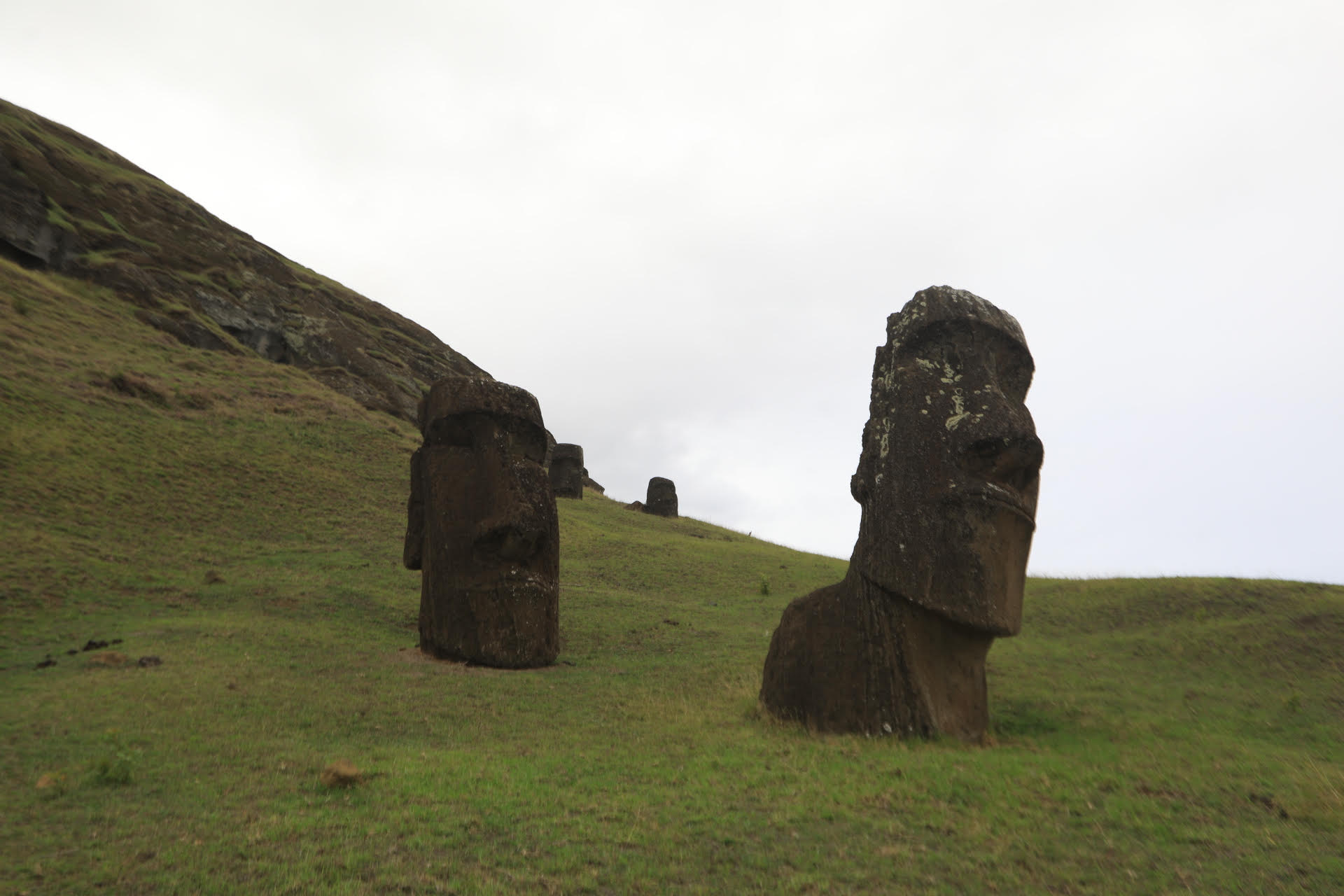
Rano rakaru, aka the moai quarry-
So fun fact about the quarry, there’s still several partially quarried moai in situ, so we know a great deal about the process. I actually have extensive pictures of the site, but not attached. Anyway. They’re carved starting with the nose, then the body outline, then neck and chin, then they work their way around to the back, which is technically underneath it since they’re carved out of the mountain laying flat. That must’ve been a super terrifying job carving the back out since it would’ve meant having a 20 statue above you supported by the material you were removing. Once it was free they’d dig a pit lower down on the hillside and gently slide it down into the pit so that it was standing upright. Many didn’t survive that process, were abandoned, and erosion filled in the pit, so the hillside is littered with partially buried upright moai. If they did survive the pit was dug out on the downhill side, ropes were fastened around its head, and it was rocked back and fourth to slowly walk it to its destination. Some of them were moved as far as 11 miles over extremely uneven terrain.
Anakena –
The islands only sandy beach, also home to moai. This is allegedly where the Rapa Nui people first landed when they came here. It’s on the north coast of the island, and I would’ve expected they’d have made landfall on the west coast, but the vast majority of their settlements were on the east coast. So who knows.
Why are the moai located where they are? What was their purpose?
They were located at settlements. There’s an 80% correlation between moai and fresh water sources. You build your home where there’s water. Makes sense. Their purpose was ancestor worship. They’re basically giant tombstones, and it was believed their ancestors mana would reside in the statue and bring them prosperity.
